
Free Bicycle Scheme for Plus One Students: School Education Department Distribution Drive

The Government of Tamil Nadu accelerated the statewide distribution of free bicycles to Class 11 (Plus One) students enrolled in Government and Government-aided higher secondary schools across all 38 districts.
- What: Distribution of free bicycles to higher secondary students to eliminate transportation barriers and arrest secondary school dropouts.
- Who: Administered by the Department of School Education, benefiting boys and girls studying in Class 11 in Government and Government-aided schools.
- When & Where: Implemented across all 38 revenue districts of Tamil Nadu for the academic year 2026–27.
- Why & Outlay: Mitigates rural travel distance, enhances rural girl-child retention in higher secondary education, and promotes clean non-motorized local mobility with dedicated budget outlays.
- Static TNPSC Link: Tamil Nadu Welfare Schemes & Human Development Indicators (Unit 9: Development Administration in Tamil Nadu).
Tamil Nadu Urban Habitat Development Board (TNUHDB): ₹261.85 Crore Sanctioned for Tenement Reconstruction

The Housing and Urban Development Department sanctioned ₹261.85 crore to the Tamil Nadu Urban Habitat Development Board (TNUHDB) for demolishing dilapidated residential tenements and constructing multi-storey disaster-resilient housing blocks.
- What: Special administrative sanction of ₹261.85 crore for reconstructing aging slum clearance board tenements into modern residential complexes with civic amenities.
- Who: Executed by the Tamil Nadu Urban Habitat Development Board (TNUHDB) under the Housing and Urban Development Department.
- When & Where: November 2026, targeting congested urban settlements in Chennai, Madurai, and Coimbatore.
- Why & Outlay: Ensures safe, hygienic housing for economically weaker sections (EWS) and urban slum dwellers under the state's 'Slum-Free Cities' vision.
- Static TNPSC Link: Social Welfare Policies and Housing Schemes in Tamil Nadu (Unit 9: Development Administration). Originally established in 1970 as the Tamil Nadu Slum Clearance Board.
State Disaster Management Training Institute at Guindy, Chennai: ₹83 Crore State-of-the-Art Complex
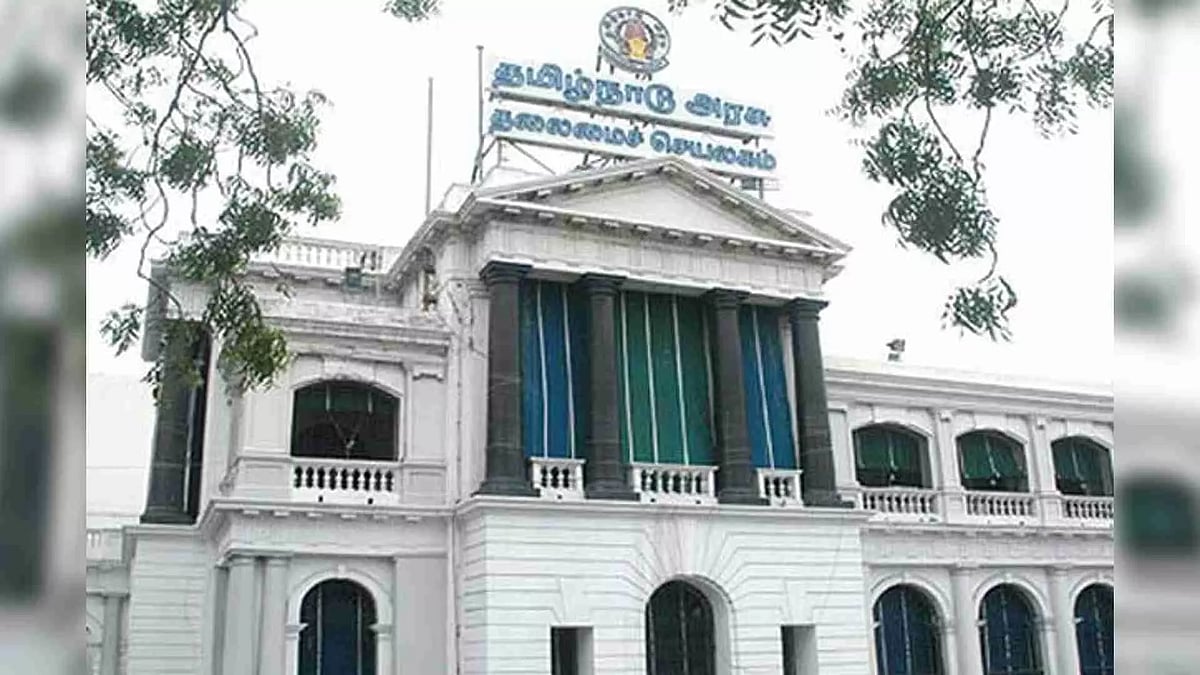
The Government of Tamil Nadu floated tenders for constructing a premier State Disaster Management Training Institute at Guindy, Chennai, spanning a 17-storey command and academic campus.
- What: Construction of a permanent specialized 17-storey training institute for climate adaptation, flood response, and emergency search-and-rescue.
- Who: Administered by the Revenue and Disaster Management Department and the Tamil Nadu State Disaster Management Authority (TNSDMA).
- When & Where: Sanctioned at Venkatapuram, Guindy, Chennai, covering a 9.40-acre campus.
- Why & Outlay: Total project outlay of ₹83 crore. Equips State Disaster Response Force (SDRF), coastal volunteers, and civic responders with modern flood-simulation and GIS tools.
- Static TNPSC Link: Disaster Management Act, 2005 (SDMA headed by Chief Minister) & Geography of Tamil Nadu (Vulnerability to North-East Monsoon and Cyclones - Unit 1 & Unit 9).
Tamil Nadu Maritime Board 99th Board Meeting: Minor Port Modernization & Coastal Cargo Promotion

The Tamil Nadu Maritime Board convened its 99th board meeting under the chairmanship of the Minister for Highways and Minor Ports to expedite coastal shipping logistics across non-major ports.
- What: Approval of operational masterplans for minor ports, captive jetties, and coastal green hydrogen cargo terminals.
- Who: Chaired by the Minister for Highways and Minor Ports, involving the Tamil Nadu Maritime Board (TNMB).
- When & Where: Convened in Chennai, overseeing coastal activities along Tamil Nadu's 1,076 km coastline.
- Why & Outlay: Boosts coastal cargo movements at Cuddalore, Nagapattinam, Kattupalli, and Colachel, reducing highway congestion and transport emissions.
- Static TNPSC Link: Infrastructure and Economic Geography of Tamil Nadu (Unit 9: Ports and Maritime Trade History in Tamil Nadu).
Archaeological Documentation: 10th-Century Chola Sluice Stone Inscription Documented near Kumbakonam

Epigraphists and archaeological researchers documented a rare 10th-century Chola period granite sluice stone (Kumizhi Thoompu) inscription in an ancient irrigation tank near Kumbakonam, Thanjavur district.
- What: Discovery and epigraphical decipherment of a 10th-century Tamil inscription recording community tank desiltation and sluice construction during the medieval Chola era.
- Who: Documented by field epigraphists from the Tamil University and local heritage enthusiasts.
- When & Where: Discovered in an agrarian tank bed near Kumbakonam, Thanjavur district.
- Why & Outlay: Provides vital historical evidence of Chola decentralized water harvesting systems (Kudimaramathu) and local tank maintenance taxation (Eri-ayam).
- Static TNPSC Link: History, Culture and Heritage of Tamil Nadu (Unit 8: Chola Administration, Local Self-Government & Inscriptional Sources).
Directorate of Revenue Intelligence Seizes 12.87 Tonnes Red Sanders at Chennai Port

DRI officers busted an international smuggling syndicate attempting to smuggle 12.87 tonnes of red sanders wood logs to Southeast Asia through Chennai Port.
- What: Interception and seizure of 12.87 tonnes of premium-grade red sanders logs valued at ₹7.72 crore concealed in an export container.
- Who: Executed by the Directorate of Revenue Intelligence (DRI), Chennai Zonal Unit, under the Customs Act, 1962.
- When & Where: Harbour container freight station at Chennai Port.
- Why & Outlay: Smugglers misdeclared cargo as decorative paper laminates. Red sanders is protected under CITES Appendix II and Schedule IV of Wildlife Protection Act, 1972.
- Static TNPSC Link: Forest Wealth and Environmental Conservation in South India (Unit 1: Biodiversity & Natural Resources).
WHO Global Tuberculosis Report 2026: Tamil Nadu & National Health Trajectory

The World Health Organization (WHO) published the Global TB Report 2026, commending India's 86% domestic funding while highlighting regional eradication targets.
- What: Annual global assessment of TB disease burden, notification rates, domestic spending, and donor shortfalls.
- Who: Released by the World Health Organization (WHO); monitored nationally by the Central TB Division, Ministry of Health and Family Welfare.
- When & Where: November 2026, covering global data across 192 countries.
- Why & Outlay: India's domestic funding crossed 86%. Tamil Nadu implements proactive doorstep screening under the 'TN Kasanoi Erapilla Thittam' (TB-Free Tamil Nadu initiative).
- Static TNPSC Link: Health Systems and Public Health Programmes in Tamil Nadu (Unit 9: Health Indicators and Social Welfare).
Tamil Nadu Approves ₹45.90 Crore to Draft Comprehensive Master Plan for Greater Chennai Boundary Expansion
The Municipal Administration and Water Supply Department of Tamil Nadu sanctioned ₹45.90 crore for project consultancy and master planning to expand the geographic limits of Greater Chennai Corporation. The initiative seeks to merge peripheral municipalities and village panchayats into an integrated mega-urban governance corridor.
- What: Sanction of ₹45.90 crore to draft a Comprehensive Master Plan and City Mobility Plan (CMP) covering 1,194 sq km for the expanded Greater Chennai Corporation (GCC).
- Who / Implementing Department: Chennai Unified Metropolitan Transport Authority (CUMTA) and Housing & Urban Development Department.
- When & Where: November 2026, covering North Chennai and peripheral industrial clusters.
- Why & Outlay: Integrates suburban rail, Metro corridors, and 7 new feeder bus routes to eliminate transport bottlenecks under the Vada Chennai Valarchi Thittam.
- Static TNPSC Link: Urban Infrastructure & Transport Planning in Tamil Nadu (Unit 9: Development Administration).
History & Centenaries: Periyar's Historic Walkout at the 1925 Kanchipuram Conference and the Emergence of the Self-Respect Movement
Commemorating the centenary of the 1925 Kanchipuram Congress Conference where E.V. Ramasamy Periyar staged a historic walkout over communal representation, paving the way for the Self-Respect Movement.
- What: Commemoration of the centenary of Periyar E.V. Ramasamy's walkout from the Kanchipuram Tamil Nadu Congress Committee conference in November 1925.
- Who / Department: Organized by state cultural and rationalist research forums.
- When & Where: November 1925 / 2026 Centenary, Kanchipuram, Tamil Nadu.
- Why & Benefit: Periyar demanded communal representation (communal G.O.) for non-Brahmins. When the resolution was rejected, his walkout directly catalysed the Self-Respect Movement (Suyamariyathai Iyakkam).
- Static TNPSC Link: Socio-Religious Reform Movements and Social Justice in Tamil Nadu (Unit 8 & Unit 9: Justice Party and Dravidian Movement).
Urban Heritage: Tracing the Origins of Kaladipettai (Colletpet) as Madras's Earliest Planned Weavers' Settlement (1717)

Historical insights into Kaladipettai near Tiruvottiyur, established as Colletpet in 1717 by Madras Governor Joseph Collet to foster a dedicated calico handloom weaving hub.
- What: Historical documentation of Kaladipettai (originally Colletpet), established in 1719 as Madras's first dedicated handloom weaver settlement.
- Who / Department: Documented by Chennai city historians and the State Handloom Department.
- When & Where: Kaladipettai, North Chennai (adjacent to Tiruvottiyur).
- Why & Benefit: Established by East India Company Governor Joseph Collet, who settled handloom weaving families from Kanchipuram and Chengalpattu with tax-free land and temple endowment grants.
- Static TNPSC Link: History of Madras Presidency and Handloom Trade in Tamil Nadu (Unit 8: Economic History of Tamil Nadu).
Wildlife Conservation: Tamil Nadu Forest Department Launches Habitat Restoration Programme for Blackbuck Grasslands

Tamil Nadu Forest Department initiates a comprehensive habitat restoration initiative across Point Calimere and Vallanadu to secure remaining open scrub grassland corridors for the Indian Blackbuck.
- What: Multi-crore grassland ecology restoration initiative to secure breeding corridors for the Blackbuck (Antilope cervicapra).
- Who / Department: Tamil Nadu Forest Department and State Wildlife Board.
- When & Where: Implemented across Point Calimere Sanctuary (Nagapattinam) and Vallanadu Sanctuary (Thoothukudi).
- Why & Benefit: Restores native grazing flora, eradicates invasive Prosopis juliflora shrubs, and prevents human-wildlife conflict along agricultural fringes.
- Static TNPSC Link: Wildlife Sanctuaries, Protected Areas and Endemic Fauna of Tamil Nadu (Unit 1 & Unit 9).
Marine Governance: BOBP-IGO Chennai Hub Spearheads Sustainable Fisheries and Transboundary Marine Resource Protection

The Bay of Bengal Programme Inter-Governmental Organisation (BOBP-IGO), headquartered in Chennai, launches a multi-nation action framework for small-scale coastal fishers and marine biodiversity conservation.
- What: Regional ministerial dialogue on sustainable transboundary fisheries, marine spatial planning, and artisanal fisherfolk safety.
- Who / Department: Bay of Bengal Programme Inter-Governmental Organisation (BOBP-IGO) headquartered in Chennai, involving India, Bangladesh, Sri Lanka, and Maldives.
- When & Where: Convened in Chennai, Tamil Nadu.
- Why & Benefit: Resolves Palk Bay fishing friction, introduces sea safety GPS beacons, and prevents bottom-trawling damage to coral reefs and seagrass beds.
- Static TNPSC Link: Coastal Economy, Fisheries Welfare and Blue Economy Policies in Tamil Nadu (Unit 9).
Karthigai Deepam 2026: Flag-Hoisting at Thiruvannamalai Temple; 4,500 kg Ghee Sourced for Maha Deepam

The annual Karthigai Deepam festival commenced with traditional flag-hoisting (Kodiyetram) at the historic Arulmigu Arunachaleswarar Temple in Thiruvannamalai. District and temple administrations procured 4,500 kg of pure Aavin ghee and deployed over 12,000 police personnel for the renowned Maha Deepam lit atop the 2,668-foot holy hill.
- What: Ceremonial flag-hoisting (Kodietram) marking the commencement of the renowned 10-day Karthigai Deepam Brahmotsavam.
- Who / Department: Administered by the Hindu Religious and Charitable Endowments (HR&CE) Department and Tamil Nadu Police.
- When & Where: Arunachaleswarar Temple, Thiruvannamalai.
- Why & Benefit: Culminates with lighting the Maha Deepam atop the 2,668-foot holy Annamalai hill, celebrated as the Agni Sthalam among the Pancha Bhoota Sthalams.
- Static TNPSC Link: Temple Architecture and Cultural Heritage of Tamil Nadu (Unit 8: Saivism and Pancha Bhoota Sthalams in Tamil Nadu).