
Marine Ecotoxicology in Tamil Nadu: CAS Marine Biology Study Reveals Heavy Metal Contamination in Coastal Finfish Across Four Landing Centres
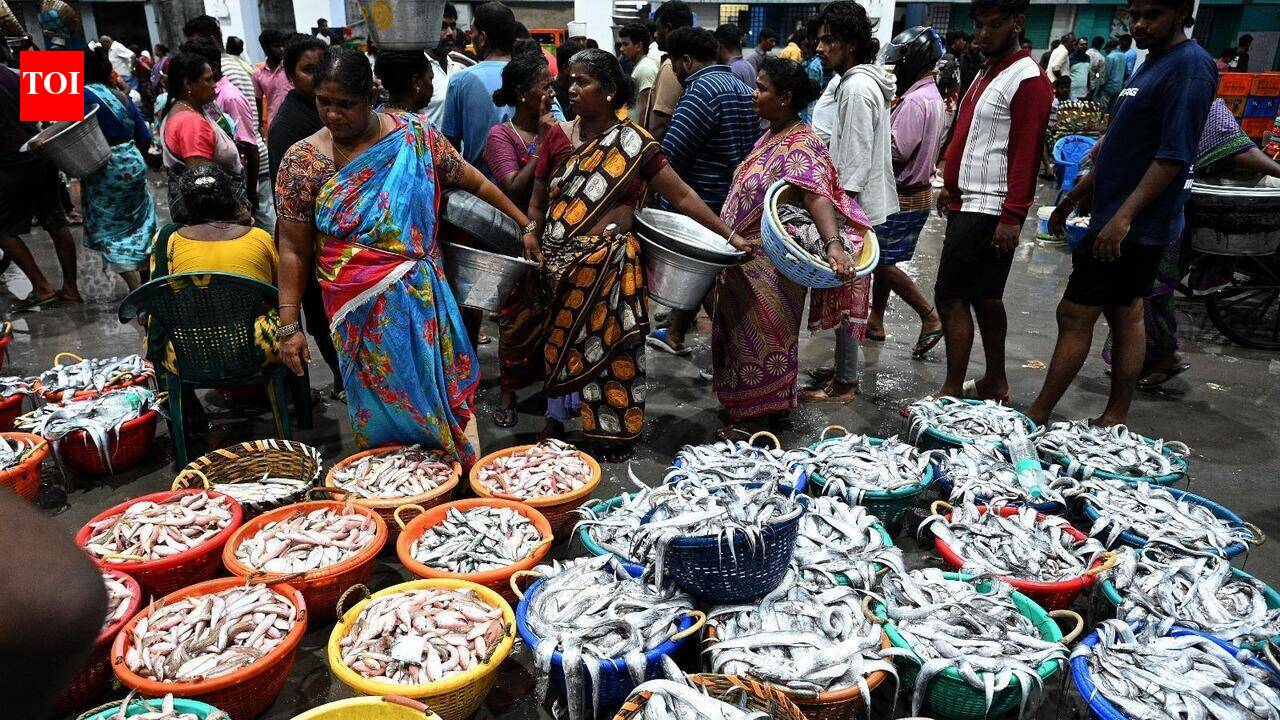
A peer-reviewed ecotoxicology study published in Discover Environment by Annamalai University’s Centre of Advanced Study (CAS) in Marine Biology revealed elevated concentrations of heavy metals in commercially harvested finfish across four coastal landing centres in Tamil Nadu.
| Fish Landing Centre | Hazard Index (HI) | Dominant Heavy Metal | Primary Anthropogenic Source |
|---|---|---|---|
| Mallipattinam (Thanjavur) | 3.48 | Lead (Pb) & Iron (Fe) | Mechanised trawler maintenance, lead-battery effluents & agrochemical runoff |
| Uppanar Estuary (Cuddalore) | 2.50 | Zinc (Zn) & Copper (Cu) | SIPCOT chemical industrial complex discharge & treated municipal sewage |
| Velankanni (Nagapattinam) | 2.21 | Lead (Pb) | Pilgrim boat traffic, anti-fouling paints & untreated domestic sewage |
| Kasimedu (Chennai Harbour) | 1.82 | Cadmium (Cd) & Chromium (Cr) | Port bunkering operations, metropolitan industrial run-off & ballast discharge |
Key Scientific Findings & Public Health Implications
- Target Hazard Quotient (THQ) & Hazard Index (HI): Under US EPA and WHO ecotoxicology protocols, a Hazard Index exceeding 1.0 indicates potential long-term non-carcinogenic health hazards for regular consumers. All four surveyed landing sites registered HI values significantly above the threshold of 1.0.
- Bioaccumulation in Apex Demersal Species: High trophic-level predatory finfish—including King Mackerel (Scomberomorus commerson), Barramundi (Lates calcarifer), and White Pomfret—exhibited the highest bioaccumulation in liver and gill tissues due to biomagnification along coastal trophic chains.
- Ecosystem Warning for Coromandel Coast: Researchers urged the Tamil Nadu Pollution Control Board (TNPCB) to institute regular bi-monthly toxicological surveillance at major fish harbours and strictly regulate untreated effluent discharges from SIPCOT industrial zones.
GK Context: Annamalai University’s Centre of Advanced Study in Marine Biology, located at Parangipettai (Porto Novo) along the Vellar Estuary, was established in 1957. It is one of India’s premier coastal research institutions and serves as a designated Centre of Excellence in marine sciences under the UGC.
Related Previous Year Question (PYQ):
"Discuss the causes of heavy metal pollution in the coastal waters of Tamil Nadu and suggest mitigation measures to protect marine ecology and human health." — TNPSC Group 1 Mains (Paper III - Science, Environment & Technology) 2022
Welfare & Social Justice: Tamil Nadu Government Formally Withdraws Over 600 Prosecution Cases Against 92,000 Protesting Farmers and Teachers
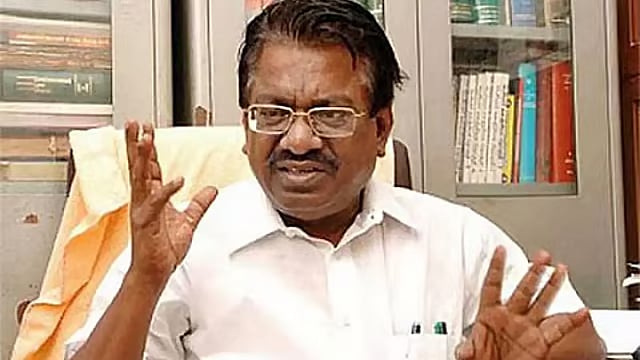
Fulfilling a major legislative policy commitment announced under Assembly Rule 110, the Tamil Nadu Home Department issued formal Government Orders withdrawing over 600 criminal and prosecution cases registered against more than 92,000 farmers, school teachers, and civic activists.
| Category of Agitation | Number of Cases Withdrawn | Beneficiary Cohort | Underlying Civic Demand |
|---|---|---|---|
| Agricultural Demonstrations | 284 Cases | 48,000+ Farmers | Remunerative crop prices, rollback of central land ordinances, and water rights |
| Teacher & Staff Agitations | 192 Cases | 31,500+ Teachers | JACTTO-GEO agitations seeking Old Pension Scheme (OPS) restoration |
| Public & Environmental Rallies | 138 Cases | 12,500+ Citizens | Pollution protests, rural water-body protections, and civic rights campaigns |
Legal Mechanism & Constitutional Context
- Application of Section 321 CrPC / Section 360 BNSS: The Public Prosecutor, acting on instructions from the State Government, submitted formal withdrawal petitions before respective Judicial Magistrate courts under Section 321 of the Code of Criminal Procedure (corresponding to Section 360 of the Bharatiya Nagarik Suraksha Sanhita).
- Exclusion of Heinous Offenses: The blanket relief applies strictly to peaceful demonstrations, unlawful assembly (Section 143/144), and disobedience of public servant orders (Section 188), while cases involving serious violence, assault on public servants, or property damage were excluded following scrutiny by a high-level committee headed by the Director General of Police (DGP).
- Administrative De-clogging: The withdrawal frees subordinate courts across 38 districts from thousands of protracted non-violent summons, allowing judicial resources to focus on heinous criminal trials.
GK Context: Assembly Rule 110 of the Tamil Nadu Legislative Assembly Rules enables the Chief Minister or Ministers to make statements on matters of urgent public importance with the permission of the Speaker, without any debate or questions being raised immediately thereafter.
Related Previous Year Question (PYQ):
"Explain the constitutional provisions and procedural mechanisms governing the withdrawal from prosecution by the State Government under criminal jurisprudence in India." — TNPSC Group 2 Mains (Paper II - Indian Polity & Governance) 2021
Livelihood Security: Tamil Nadu Government Enhances Monsoon Relief Cash Assistance for Registered Salt Pan Workers to ₹7,000
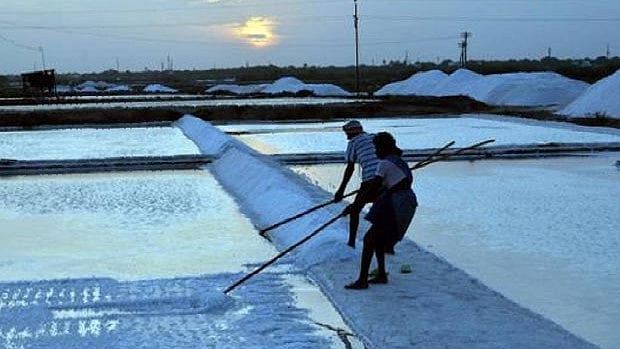
The Tamil Nadu Department of Industries, Investment Promotion and Commerce issued a Government Order enhancing the annual monsoon livelihood relief cash assistance for registered unorganised salt pan workers from ₹5,000 to ₹7,000 per family.
| Metric / Provision | Revised Welfare Benefit (2026) | Previous Livelihood Norm |
|---|---|---|
| Cash Assistance Amount | ₹7,000 per family (Single tranche Direct Benefit Transfer) | ₹5,000 per family |
| Administering Welfare Board | Tamil Nadu Salt Pan Workers Welfare Board (Unorganised Workers Directorate) | Labour Welfare Board |
| Primary Production Hubs | Thoothukudi, Vedaranyam (Nagapattinam), Marakkanam (Villupuram) | Coastal saline belts |
| Target Beneficiary Coverage | 35,000+ Enrolled Salt Pan Workers | ~28,000 Workers |
Socio-Economic Justification & Industrial Profile
- Seasonal Inundation & Unremunerative Months: Salt crystallization in open solar evaporation pans ceases completely during the Northeast Monsoon (October to December) due to prolonged rainfall, leaving manual laborers without daily earnings for three consecutive months.
- Tamil Nadu’s National Salt Standing: Tamil Nadu is India’s second-largest salt-producing state, contributing approximately 2.5 million metric tonnes (10–12% of national output), trailing only Gujarat (75%). Thoothukudi alone accounts for over 70% of Tamil Nadu’s salt output.
- Integrated Safety Gear & Health Cover: In addition to the enhanced cash assistance, enrolled salt pan workers receive free protective eyewear, specialized rubber gumboots to prevent brine corrosion, and annual ocular health checkups under state public health programs.
GK Context: Vedaranyam in Nagapattinam district was the historic destination of the Salt Satyagraha in South India, organized by C. Rajagopalachari (Rajaji) from Tiruchirappalli on April 13, 1930, mirroring Mahatma Gandhi’s Dandi March.
Related Previous Year Question (PYQ):
"Critically assess the social security measures undertaken by the Government of Tamil Nadu for unorganised sector workers, with special focus on coastal and seasonal labor." — TNPSC Group 1 Mains (Paper II - Social Justice & Welfare Schemes) 2019
Urban Water Governance: Chennai Metro Water Resumes 180 MLD Drinking Water Supply from Historic Veeranam Lake
The Chennai Metropolitan Water Supply and Sewerage Board (CMWSSB) fully restored regular drinking water transmission from Veeranam Lake in Cuddalore district, pumping 180 million litres per day (MLD) into the city grid following copious Northeast Monsoon inflows.
| Infrastructure Component | Operational Technical Metric |
|---|---|
| Lake Water Body | Veeranam Lake (Veeranarayanapuram), Cuddalore district |
| Full Reservoir Level (FRL) | 47.50 feet (Storage Capacity: 1,465 Mcft) |
| Transmission Capacity | 180 MLD through 235 km dedicated pipeline |
| Water Treatment Plant | Vadakkuvoothu Treatment Plant (Near Neyveli) |
| Supply Beneficiaries | South Chennai zones (Velachery, Alandur, Perungudi, Thiruvanmiyur) |
Historical Engineering & Modern Transmission Architecture
- Chola Hydraulic Engineering: Veeranam Lake was excavated in the 10th century CE by Chola Prince Rajaditya Chola (son of Parantaka Chola I) and named Veeranarayana Lake after his father’s title. It historically receives inflows from the Kollidam (Coleroon) River via the Vadavar canal.
- New Veeranam Project (2004): Commissioned in 2004, the New Veeranam Project transports treated surface water across 235 km through large-diameter PSC pipelines, functioning as Chennai’s primary drought-buffer during deficit monsoon cycles.
- Augmentation of City Storage: Inflows of 180 MLD from Veeranam enable Chennai Metro Water to reduce drawdown from city reservoirs (Poondi, Cholavaram, Red Hills, Chembarambakkam, and Kannankottai Thervoy Kandigai), conserving critical municipal reserves for summer 2027.
GK Context: Veeranam Lake serves as the iconic opening setting for Kalki Krishnamurthy’s celebrated historical novel Ponniyin Selvan, where protagonist Vandiyathevan travels along the vast embankment of Veeranarayana lake on the day of Adi Perukku.
Related Previous Year Question (PYQ):
"Highlight the salient features of the water management initiatives undertaken to secure the drinking water needs of the Chennai metropolitan area." — TNPSC Group 1 Mains (Paper III - Geography of Tamil Nadu) 2021
Public Health & Veterinary Surveillance: Animal Husbandry Department Activates Biosecurity Containment Following H5N1 Avian Influenza Outbreak in Cuddalore
The Tamil Nadu Animal Husbandry, Dairying, Fisheries and Fishermen Welfare Department deployed rapid response teams and instituted a strict 10-km surveillance zone following confirmation of the H5N1 Avian Influenza virus among poultry in Cuddalore district.
| Surveillance Parameter | Departmental Containment Standard |
|---|---|
| Pathogen Identification | Highly Pathogenic Avian Influenza (HPAI) Subtype H5N1 |
| Confirming National Laboratory | National Institute of High Security Animal Diseases (NIHSAD), Bhopal |
| Infected Zone (Culling Radius) | 1 km radius around the epicentre (containment and scientific disposal) |
| Surveillance Zone | 10 km radius for clinical screening, movement restriction, and disinfections |
| Preventive Protocol | Immediate restriction on inter-district poultry transport, daily veterinary audits, and bird market sanitization |
Epidemiological Controls & State Zoonotic Protocol
- One Health Multi-Departmental Response: The state activated the One Health framework involving Animal Husbandry, Public Health, and Forest Departments to monitor wetland migratory bird habitats and commercial poultry farms concurrently.
- Migratory Bird Corridors: Cuddalore’s proximity to coastal wetlands and Pichavaram mangroves brings migratory waterfowls along the Central Asian Flyway (CAF), which act as natural asymptomatic reservoirs for avian influenza viruses.
- Compensation Package: In accordance with the Government of India’s Action Plan for Prevention, Control & Containment of Avian Influenza, farmers whose poultry birds are culled receive direct cash compensation disbursed jointly by Central and State disaster funds.
GK Context: Avian influenza is caused by Type A viruses of the family Orthomyxoviridae. The primary surface glycoproteins that classify influenza strains are Hemagglutinin (H, 18 subtypes) and Neuraminidase (N, 11 subtypes). Subtypes H5 and H7 are categorized as Highly Pathogenic Avian Influenza (HPAI).
Related Previous Year Question (PYQ):
"Explain the concept of One Health and discuss its significance in preventing zoonotic infectious disease outbreaks in Tamil Nadu." — TNPSC Group 1 Mains (Paper III - Science & Technology) 2023
Archaeology & Heritage: Ancient Megalithic Ochre Rock Paintings Discovered in Villupuram District Shedding Light on Iron Age Rituals
Archaeologists and epigraphists discovered a rare cluster of ancient rock paintings rendered in red ochre and white pigment inside a natural rock shelter at Sendamangalam in Villupuram district, dating to the late Megalithic / early Iron Age (circa 1000 BCE to 300 BCE).
| Archaeological Element | Field Observation & Technical Details |
|---|---|
| Discovery Location | Sendamangalam rock shelters, Villupuram district |
| Chronological Horizon | Late Megalithic to Early Iron Age (circa 1st millennium BCE) |
| Pigment Composition | Hematite-derived red ochre (iron oxide) and kaolin white clay |
| Depicted Motifs | Anthropomorphic hunting figures, cattle herds, celestial symbols, and tribal ceremonial dances |
| Supervisory Agency | Tamil Nadu State Department of Archaeology (TNSDA) |
Significance for Tamil Nadu’s Prehistoric Chronology
- Continuity with Keeladi and Mayiladumparai: The discovery provides vital artistic and ritual context to the technological milestones established by recent AMS carbon datings at Mayiladumparai (2172 BCE for Iron Age in Tamil Nadu), documenting how pastoral and early agrarian communities visualized their cosmos.
- Artistic Style & Iconography: The linear stick-figure humans brandishing spears and composite bovine depictions indicate pastoral-hunting traditions. Superimposed layers of white kaolin over red ochre suggest multiple periods of ritual usage across centuries.
- Protection Under Heritage Framework: The Tamil Nadu State Department of Archaeology has initiated boundary demarcation to declare the rock shelter a protected monument under the Tamil Nadu Ancient and Historical Monuments and Archaeological Sites and Remains Act, 1966.
GK Context: Famous rock art sites in Tamil Nadu include Mallapadi (Dharmapuri), Kilvalai (Villupuram - famous for anthropomorphic figures called ’Rathakkaaran’), Settavarai (Villupuram - famous for deer and fish depictions), and Alampadi.
Related Previous Year Question (PYQ):
"Trace the prehistoric and protohistoric cultural landscape of Tamil Nadu with special reference to rock art and megalithic burial sites." — TNPSC Group 1 Mains (Paper I - History & Culture of Tamil Nadu) 2022
Maritime Industrialisation: Thoothukudi Designated as One of Five National Greenfield Shipbuilding Clusters Under Maritime Vision 2047

Union Minister for Ports, Shipping and Waterways Sarbananda Sonowal announced that Thoothukudi in Tamil Nadu has been officially designated as one of five proposed national greenfield coastal shipbuilding clusters under the $10-billion Maritime Amrit Kaal Vision 2047 masterplan.
| National Greenfield Cluster | State | Geographical Strategic Advantage |
|---|---|---|
| Thoothukudi (V.O.C. Port) | Tamil Nadu | Proximity to East-West international shipping lane (10 nautical miles off southern tip) |
| Dugarajapatnam | Andhra Pradesh | Proximity to Krishnapatnam maritime corridor & Chennai industrial zone |
| Kuchhadi | Gujarat | Deep-draft coastline, heavy engineering, and Arabian Sea petrochemical corridor |
| Dighi | Maharashtra | Proximity to Mumbai industrial basin & western offshore oil fields |
| Kendrapada | Odisha | Bay of Bengal mineral and steel hub with Paradip port integration |
Economic Multipliers for Tamil Nadu’s Blue Economy
- Targeting Top 5 Globally by 2047: India aims to enter the top 10 shipbuilding nations by 2030 and top 5 by 2047. Thoothukudi’s major port infrastructure, dry dock potential, and skilled marine workforce make it the southern pillar of this national ambition.
- Green Vessel Fabrication & Retrofitting: Aligning with Tamil Nadu’s Green Hydrogen and Green Ammonia initiatives at Thoothukudi, the new cluster will specialize in fabricating electric coastal barges, green methanol-fueled tugs, and modernized deep-sea fishing vessels.
- High Employment Multiplier: Every direct job created in core shipyard fabrication generates over 6.4 indirect jobs in ancillary heavy engineering, precision steel welding, electrical equipment, and naval architecture.
GK Context: V.O. Chidambaranar Port in Thoothukudi commemorates the pioneering freedom fighter ’Kappalottiya Thamizhan’ V.O. Chidambaram Pillai, who founded the Swadeshi Steam Navigation Company in 1906 to challenge the British India Steam Navigation Company.
Related Previous Year Question (PYQ):
"Evaluate the role of major ports and coastal economic zones in propelling the industrial and export-oriented growth of Tamil Nadu." — TNPSC Group 1 Mains (Paper III - Economy of Tamil Nadu) 2020