
Key Facts
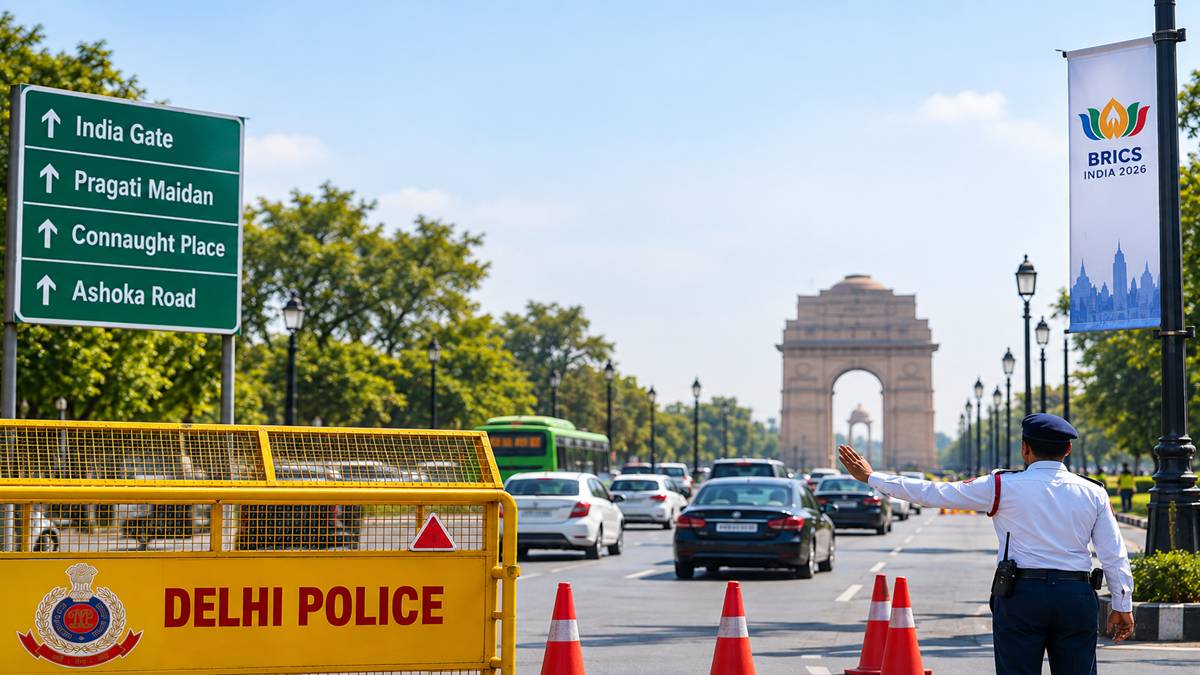
The Union Cabinet has approved an ambitious ₹1,789.52 crore Intelligent Traffic Management System (ITMS) for Delhi, promising to bring artificial intelligence, adaptive traffic signals, automated enforcement and real-time congestion monitoring to the capital's roads. It will use cameras and automated systems to detect violations such as red-light jumping, speeding, wrong-way driving, illegal parking and not wearing helmets or seat belts, covering 42 traffic corridors, to be implemented in three phases over 24 months. Delhi has around 71 lakh active registered vehicles, and critics argue the city's core problem is less a technology gap than a traffic-discipline and governance deficit, requiring human enforcement alongside AI, not a replacement for it.
GK Context
Intelligent Traffic Management Systems typically integrate CCTV/ANPR (Automatic Number Plate Recognition) cameras, AI-based violation detection, and adaptive signal control that adjusts timing based on real-time traffic flow, moving away from fixed-cycle signals. Delhi's traffic challenges are compounded by rapid urbanisation, unregulated growth of e-rickshaws, and a vehicle count that has outpaced road capacity expansion. The debate over ITMS reflects a broader governance question in Indian cities: whether technology-led enforcement can substitute for, rather than complement, on-ground policing and civic discipline.
Comments
Loading comments…