
Key Facts
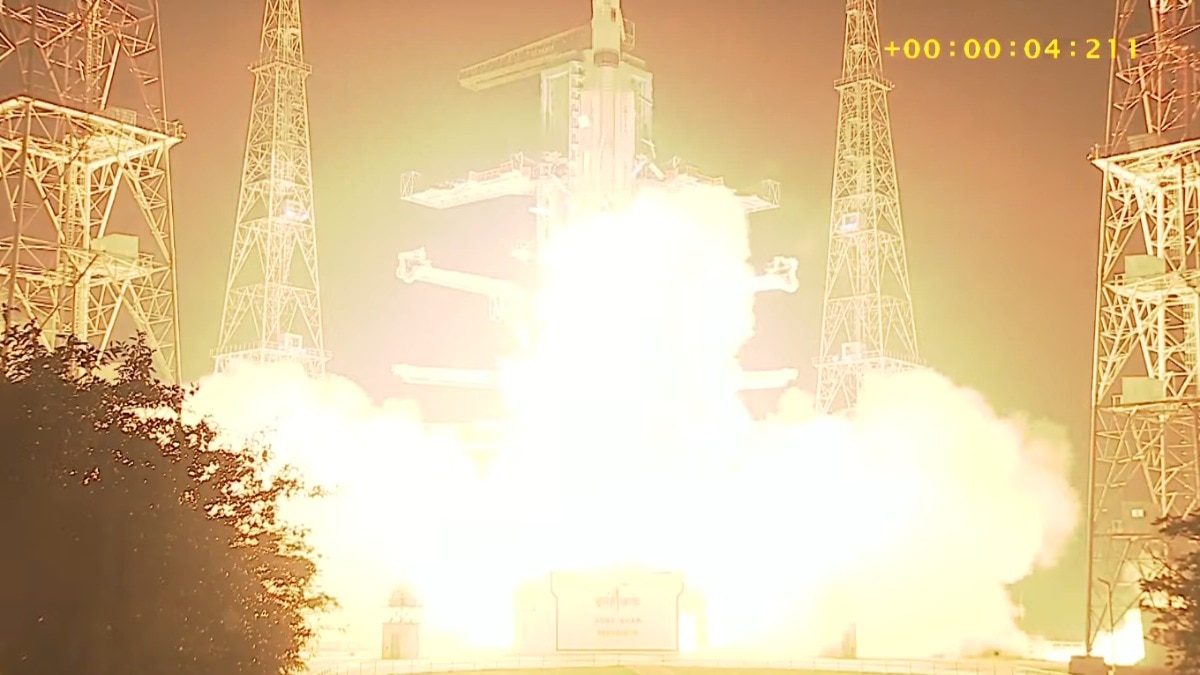
ISRO launched the navigation satellite NVS-03 on its GSLV-F18 rocket from Sriharikota on 30 October 2026. It was only the second successful ISRO launch of the year, after two PSLV failures in the previous 18 months. NavIC has been short of at least one functional satellite for six months and so could not offer standalone positioning; once NVS-03 is moved to its final slot and commissioned, the system can again have four working satellites. The three second-generation NVS satellites carry an indigenously built atomic clock, replacing the imported clocks that failed on earlier satellites. The Hindu has urged a Department of Space allocation of about ₹17,000 crore in 2027-28 (against ₹13,705.6 crore in 2026-27), a dedicated NavIC operator and a national space law.
GK Context
NavIC (Navigation with Indian Constellation), earlier called IRNSS, is India's regional navigation system covering India and up to about 1,500 km around it; the full constellation has 7 satellites, three in geostationary and four in inclined geosynchronous orbit. A user needs signals from at least four satellites to fix latitude, longitude, altitude and clock error. Other systems are GPS (USA), GLONASS (Russia), Galileo (EU), BeiDou (China) and QZSS (Japan). NVS-02, launched in January 2025, could not reach its final orbit because a valve failed to open.
Comments
Loading comments…