
Key Facts
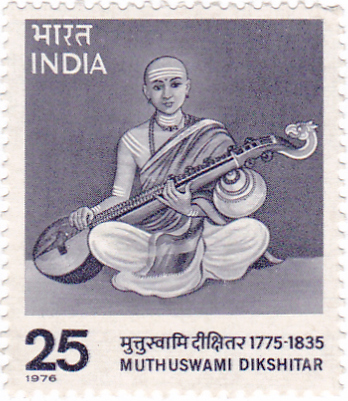
Cultural academies and classical musicians across Tamil Nadu commemorated the bicentenary musical legacy of Muthuswami Dikshitar, the youngest composer of the revered Trinity of Carnatic Music (along with Tyagaraja and Syama Sastri). Born in Tiruvarur in 1775, Dikshitar was a profound polymath, philosopher, and Sanskrit scholar whose compositions are celebrated for their majestic 'vilamba kala' (slow tempo), intricate raga bhava, and intellectual depth. Tributes highlighted his famous Guruguha mudra, his five-year spiritual sadhana under Chidambara Yogi in Varanasi, and his pioneering integration of Western melodic patterns through 'Nottuswara Sahityas'.
GK Context
The 'Musical Trinity' of Carnatic Music (Tyagaraja, Muthuswami Dikshitar, and Syama Sastri) all flourished contemporaneously in the cultural cradle of Tiruvarur during the late 18th and early 19th centuries, revolutionizing the Kriti format. Dikshitar composed primarily in Sanskrit, featuring elaborate group kritis such as the Kamalamba Navavarna Kritis, the Navagraha Kritis, and the Pancha Bhuta Sthala Kritis (praising the shrines of Earth at Kanchipuram, Water at Thiruvanaikaval, Fire at Tiruvannamalai, Air at Kalahasti, and Space at Chidambaram). Tradition records that Dikshitar departed on Deepavali day in 1835 in Ettayapuram while his disciples sang his immortal composition 'Meenakshi Me Mudam Dehi'.
Comments
Loading comments…